Some Formula 1 seasons are remembered for dominant champions, others for cars that changed what teams thought was possible. The ones that stay with people longest tend to finish on a knife-edge, with titles settled in the last laps under floodlights or in fading daylight, while radios crackle and pit walls do the math in real time.
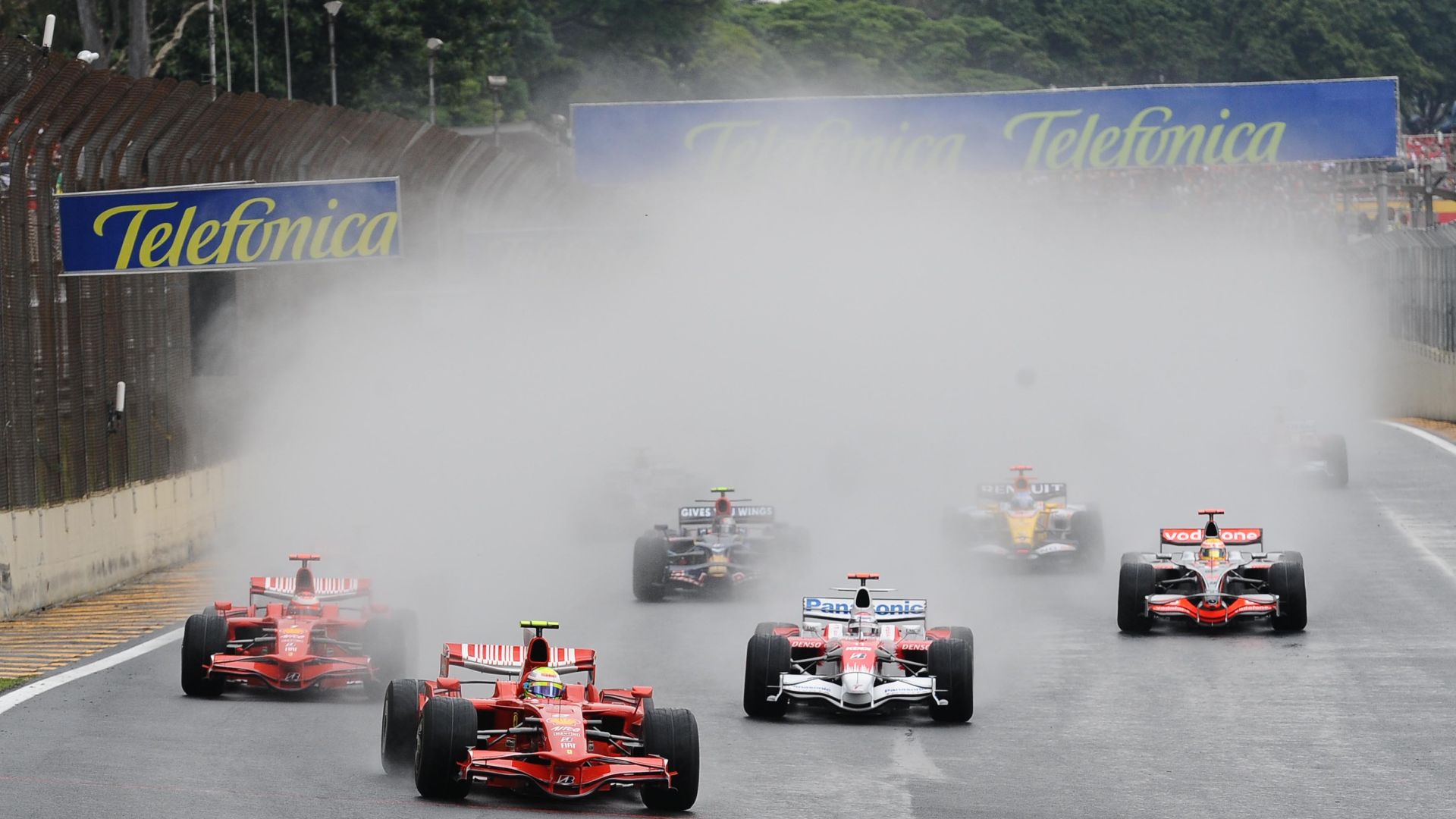
A generation thinks first of Interlagos in 2008, when Felipe Massa won at home and celebrated briefly before Lewis Hamilton slipped past Timo Glock in the final corners to take the point he needed. Another group goes straight to Abu Dhabi in 2021, a season-long fight between Hamilton and Max Verstappen compressed into a single restart and one lap that still divides opinion inside the paddock.
Long before that, championships had already been decided in ways that felt barely believable. Niki Lauda stepping out in the rain at Fuji in 1976, Nigel Mansell’s rear tire exploding in Adelaide in 1986, Michael Schumacher and Damon Hill meeting at a blind corner in Adelaide in 1994, each moment left its mark on drivers and teams who thought they had everything under control.
The story of Formula 1 title deciders runs from Fangio and Peter Collins sharing a Ferrari at Monza in 1956 to Vettel, Alonso, Hamilton and Verstappen fighting through rain, safety cars and late calls from race control. A year of work, risk and travel ends with a group of people staring at timing screens, doing quiet calculations, waiting to see which name sits at the top when the flag falls…
1956 Italian Grand Prix, Monza
Collins gives up his title shot for Fangio
Monza in 1956 carried a three-way title fight on paper, but most eyes followed Juan Manuel Fangio. The Ferrari driver arrived with an eight point lead over teammate Peter Collins and Maserati’s Jean Behra after wins in Argentina, Britain and Germany, so any solid finish in Italy would normally have closed the deal. The slipstreaming nature of the old Monza layout, along with the punishing high banking, turned that comfort into something more fragile, with tire failures already a concern before the field lined up.
Early laps showed how exposed Ferrari really were. Luigi Musso and Eugenio Castellotti both suffered left rear tire failures while fighting near the front, then another Ferrari of Alfonso de Portago slid wildly after a similar problem and limped back. Collins lost his own left rear and had to pit for fresh rubber, which moved him out of immediate title-winning range. Fangio stayed clear of those issues at first and raced in the lead group, only for a broken steering arm to send him slowly back to the pits and leave his car out of contention. At that point the champion’s season looked vulnerable, with his closest rivals still circulating.
The next phase of the race created the image that still follows this grand prix. Collins climbed back into contention in his repaired Ferrari and moved into a position where a win could tilt the title his way. When he came in again on lap 35, the team expected only a routine stop. Instead, Collins climbed out and offered the car to Fangio on the spot, removing himself from the title battle and placing the lead Ferrari back in the hands of the team leader. Fangio took over, rejoined, and now shared the car and any points with the younger driver, which effectively secured the championship once Behra retired.
Stirling Moss went on to win for Maserati, with Fangio second in the car that had started the race with Collins’ name on the side. That result gave Fangio his fourth world championship and turned Collins’ choice into one of the clearest examples of a driver sacrificing a realistic title shot for a teammate. In a feature on dramatic season endings, this race stands out less for a last-corner pass and more for a moment on the pit lane, a quiet decision that shaped the record books and set a standard of sportsmanship that still gets referenced whenever drivers talk about loyalty inside a team.